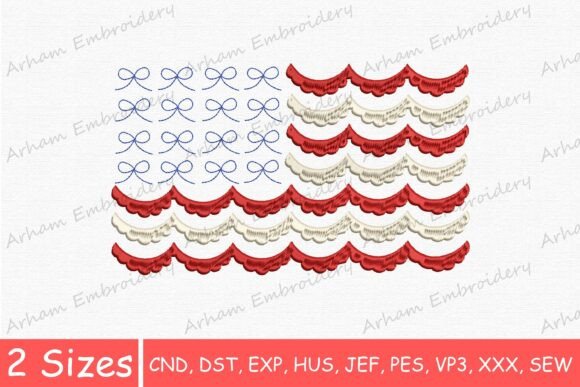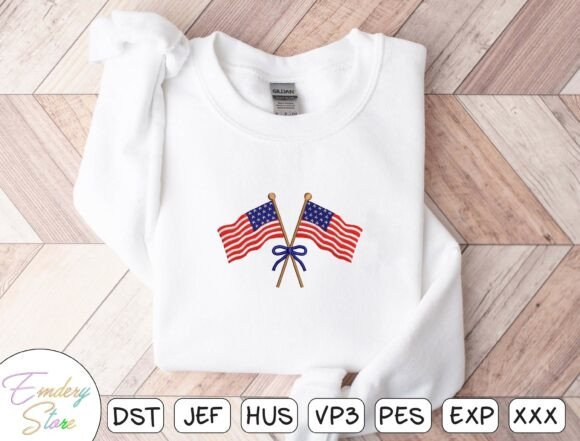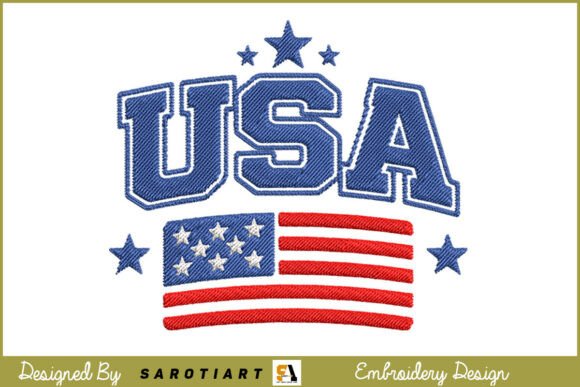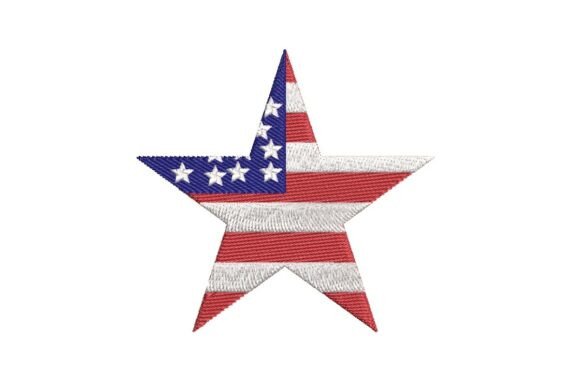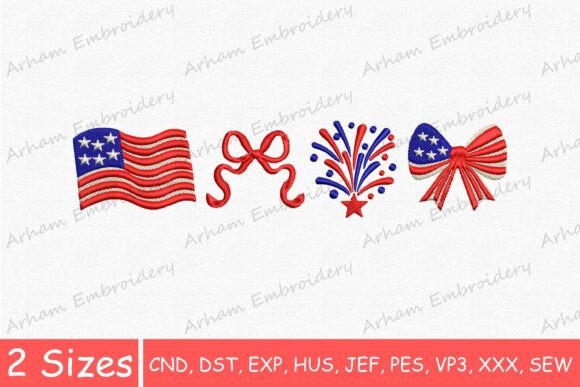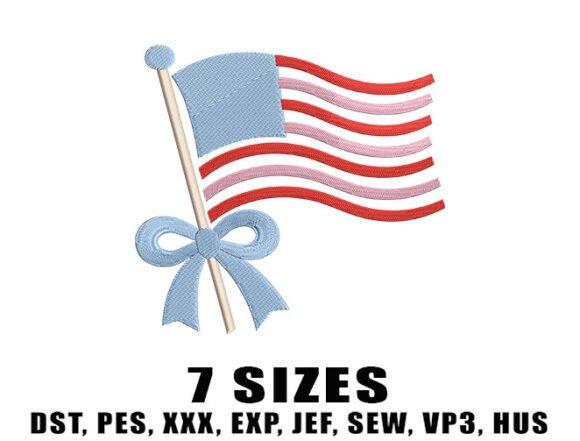
American Flag Bow
First Impression: Friendly, Bold, and Uniquely American
As an embroidery designer who’s reviewed thousands of digital embroidery files for small business clients—from bakeries and florists to pet brands and indie studios—the American Flag Bow immediately stands out. It doesn’t scream “patriotic cliché.” Instead, it feels spirited, approachable, and intentionally crafted—not just a flag slapped onto a bow, but a cohesive emblem where symbolism meets charm. The title hints at celebration and craftsmanship; the description—“spruce up your fabrics with this captivating embroidery design”—tells me it’s meant to elevate, not decorate. For a café apron or boutique tote bag, that tone matters. It reads as premium yet warm, classic yet lively—ideal for businesses that want authenticity without stiffness.
Real-World Business Use: Where American Flag Bow Shines
This machine embroidery design excels where small businesses need versatility without sacrificing brand integrity. On embroidered patches, the bow shape naturally frames the flag, creating instant visual hierarchy—perfect for sew-on branding on staff uniforms or gift-ready merchandise. As a chest logo accent on custom apparel, it adds personality without overwhelming; on caps, it works beautifully centered above the visor or subtly on the side panel when scaled thoughtfully. For apron embroidery, its balanced proportions prevent distortion across curved waistbands or pockets. Tote bag design benefits from its confident silhouette—it reads clearly even at 3.5” wide, making it ideal for branded carryalls handed to customers or sold at local markets.
It also bridges seasonal and evergreen appeal. While rooted in Independence Day, the bow motif softens overt holiday rigidity—so it transitions smoothly into summer merch, patriotic pop-ups, or year-round Americana branding (think: a craft brewery’s taproom aprons or a florist’s “Stars & Stems” collection). As a product label accent on handmade goods—say, stitched onto the corner of a linen tea towel or a ceramic mug sleeve—it reinforces artisanal care. And for Etsy sellers or crafters building a recognizable aesthetic, American Flag Bow becomes a repeatable design asset that strengthens visual consistency across listings, printable mockups, and physical packaging.
Where to Use American Flag Bow With Intention
Like any strong embroidery file, American Flag Bow demands thoughtful placement. Avoid pushing it below 2.25” on embroidered patches—fine details in the bow loops or flag stars may blur or stitch poorly on low-density fabrics. Cap embroidery requires extra caution: test the design on a curved bill first. High stitch density near the bow knot can cause puckering if stabilizer isn’t matched to fabric texture—especially on structured cotton twill or textured canvas. Dark uniforms? Confirm thread colors deliver enough contrast—white or bright red thread pops, but navy or charcoal may mute key elements unless digitized with underlay or fill adjustments.
Also consider wear-and-wash reality. If used on work shirts or café aprons, verify the finished product holds up after repeated laundering. Tight outlines and layered fills in the bow’s ribbon can trap moisture or snag—so opt for smooth, tightly woven stabilizer and avoid over-stitching during production. And never assume it scales down cleanly: always run a test stitch-out at your target size before bulk production.
How American Flag Bow Shapes Brand Identity
For small business merch, every stitch communicates trust. American Flag Bow signals pride—not just national, but in local roots, craftsmanship, and community connection. When customers see it on a bakery’s delivery tote or a pet brand’s bandana, it implies warmth, reliability, and intentionality—not mass-produced filler. That builds recognition faster than generic fonts or clipart. It also elevates perceived product value: a hand-embroidered bow feels more considered than printed text, reinforcing the handmade product ethos many buyers seek.
Visually, it anchors a brand’s color palette. Red, white, and blue threads pair effortlessly with earthy neutrals (kraft paper tags, oatmeal linen) or vibrant accents (sunflower yellow, sage green), giving designers flexibility without losing cohesion. And because it’s inherently scalable and adaptable, it integrates seamlessly beside other design assets—like a monogram, shop name, or seasonal icon—without competing for attention.
Practical Designer Notes Before You Stitch
- Test in black and white first: Print a grayscale version to assess balance—does the bow hold shape? Do flag elements read distinctly?
- Check small patch viability: Resize to 2.5” and review spacing between ribbon folds and star field—tight gaps risk thread nesting.
- Review thread color contrast: Especially on dark or heathered fabrics—lighter thread shades may require satin stitch reinforcement.
- Inspect spacing and density: Look for areas where dense fills meet open negative space—those often need adjusted underlay or reduced density for clean hooping.
- Confirm hoop size compatibility: Ensure your standard hoops (e.g., 4x4”, 5x7”) accommodate the full design without re-hooping mid-stitch.
- Test on real fabric: Run a sample on your most common substrate—cotton duck, twill, or poly-cotton blend—to gauge tension, pull, and stabilizer needs.
- Use proper stabilizer: Medium-weight cutaway works best for structured items like caps and patches; tear-away suffices for stable t-shirts or towels.
- Create a client mockup: Show how American Flag Bow looks on their actual product—this prevents revisions and builds confidence in your commercial embroidery process.
- Compare beside other assets: Lay it next to your logo, typography, or secondary icons—does it harmonize or clash?
- Confirm commercial licensing: Since this is a digital embroidery file intended for small business merch, verify usage rights cover resale, promotional distribution, and client projects before purchase.