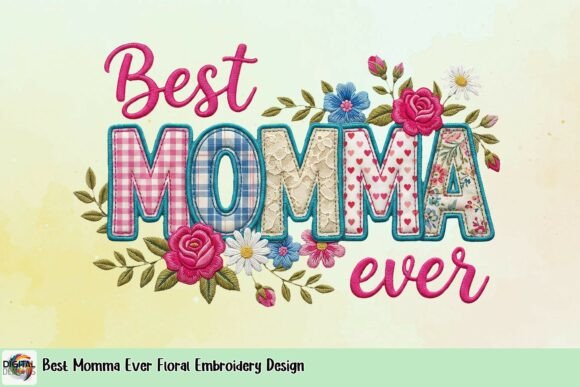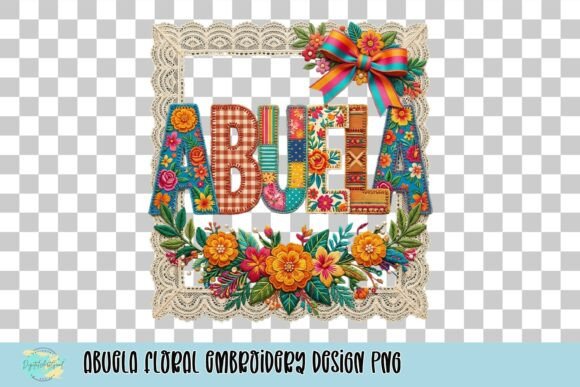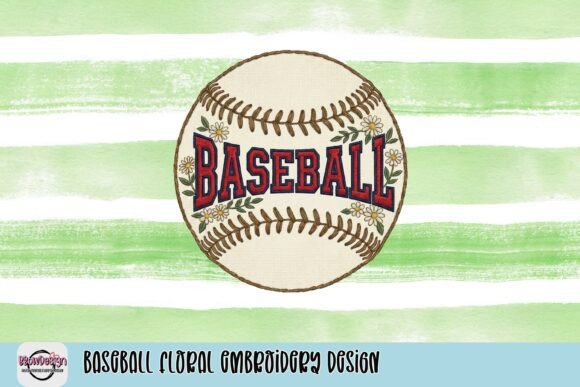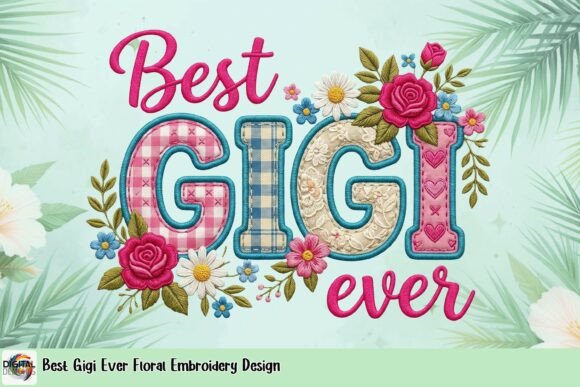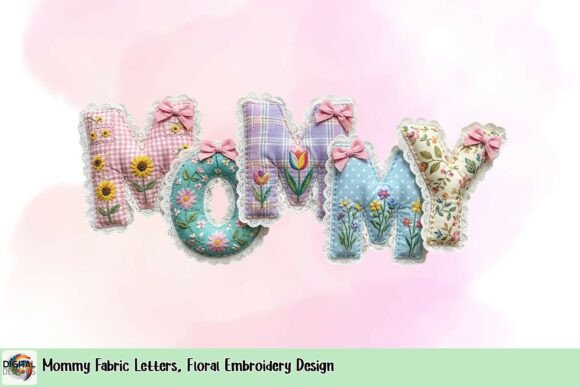
Mommy Fabric Letters, Floral Embroidery Design
A Practical Review for Small Business Merchandise & Branded Patches
As an embroidery designer who’s developed over 300 commercial designs for boutiques, cafés, florists, and handmade brands, I approach every new machine embroidery design with two questions: “Will it translate reliably across real-world merchandise?” and “Does it strengthen—rather than dilute—brand identity?” When I first saw Mommy Fabric Letters, Floral Embroidery Design, my instinct was cautious optimism. The title promises handmade charm and floral elegance—but for small business merch, charm must be balanced with clarity, durability, and versatility.
First Impression: Friendly, Elegant, and Intentionally Decorative
The phrase “Mommy Fabric Letters, Floral Embroidery Design” immediately signals warmth, care, and a soft aesthetic—ideal for baby boutiques, mama-led studios, flower shops, or wellness brands centered on nurturing. It reads as elegant rather than cutesy, classic rather than trendy, and handmade rather than mass-produced. That’s a strategic advantage: customers associate this visual language with authenticity and intentionality. However, its decorative nature means it’s not inherently scalable or neutral—it leans into emotional resonance over universal branding. For a T-Shirt Designs or Graphics category listing, that’s fine; but for a small business building cohesive design assets, it must be evaluated contextually—not just as a standalone graphic, but as part of a larger system.
Real-World Performance Across Business Applications
In practice, Mommy Fabric Letters, Floral Embroidery Design excels where personality and personal connection matter most. As an embroidered patch on a denim apron at a local bakery? It adds quiet warmth without competing with the logo. On the chest of a staff uniform at a boutique maternity studio? It reinforces brand voice—gentle, supportive, detail-oriented. On a canvas tote bag sold at a flower shop? It becomes a subtle signature—recognizable, memorable, and distinctly tactile.
- Embroidered patches: Works beautifully at 3–4 inches wide when digitized with balanced stitch density—floral elements should retain definition without bleeding on twill or felt backings.
- Apron embroidery & cap embroidery: Best placed on the left chest or lower front panel—not the curved bill of a cap unless resized and re-digitized for stability.
- Tote bag design & custom apparel: Highly effective on natural fibers like cotton canvas or linen-blend fabrics where texture enhances the handmade feel.
- Product packaging accents & customer gifts: Translates well to stitched labels on reusable gift bags or fabric tags for handmade product lines.
Where Caution Is Required
This design isn’t built for every surface—or every scale. Its floral embroidery style introduces complexity that demands attention during production:
- Small patch sizes (under 2.5 inches): Delicate stems and petal outlines may collapse or lose distinction. Always test a physical sample before bulk ordering.
- Curved surfaces (like cap fronts or sleeve cuffs): Requires careful hooping and stabilizer selection—avoid stiff foam or heavy cutaway unless compensated in digitizing.
- Textured or dark uniforms: Light-colored thread may lack contrast on charcoal or navy twill; confirm thread colors work against your base fabric—not just on screen.
- Frequent washing or high-friction use: High stitch density in floral sections can wear faster if stabilizer or thread tension isn’t optimized for durability.
Impact on Brand Identity & Customer Perception
For small businesses, especially those rooted in care-based industries (parenting, wellness, floristry, pet care), Mommy Fabric Letters, Floral Embroidery Design functions as a quiet trust signal. It tells customers: “We value craftsmanship. We understand emotional nuance. We’re not just selling—we’re supporting.” That perception elevates perceived product value and encourages repeat engagement. But consistency matters: using it alongside bold sans-serif logos or industrial-style graphics creates dissonance. Pair it thoughtfully—with soft typography, muted palettes, and complementary design assets—to reinforce visual harmony across your branded patch, tote bag design, and apron embroidery.
Essential Embroidery Designer Notes Before Production
If you’re sourcing this as a digital embroidery file for commercial embroidery, here’s what I recommend—based on years of troubleshooting client projects:
- Test in black and white first. Assess legibility and balance without color distraction—especially important for small business merch where thread availability may limit options.
- Verify patch size compatibility. Does the design hold integrity at your intended finished size? If not, consult a digitizer before cutting fabric or ordering blanks.
- Review thread color contrast on your actual fabric. A printable mockup helps—but nothing replaces stitching a swatch on your final substrate.
- Inspect letter spacing and floral flow. Tight kerning between “M-O-M-M-Y” can cause thread nesting; ensure floral motifs don’t overcrowd letterforms.
- Confirm hoop size and stabilizer needs. Dense floral areas often require medium-weight tear-away or cutaway stabilizer—especially on knits or lightweight cottons.
- Always test on real fabric before client approval. What looks crisp on screen may blur on textured linen or shrink on pre-washed denim.
- Compare it beside your other design assets. Does it sit comfortably next to your logo, icons, or secondary graphics—or does it visually compete?
- Confirm commercial licensing. Since this is listed under T-Shirt Designs and Graphics, verify usage rights explicitly cover embroidered patches, staff uniforms, and resale merchandise—not just digital display or single-use prints.
Ultimately, Mommy Fabric Letters, Floral Embroidery Design is more than a decorative motif—it’s a strategic tool for small business merch that values emotional resonance and handmade presentation. Used intentionally, it deepens brand identity, increases buyer engagement, and adds tangible value to every apron, tote bag, and embroidered patch it touches. Just remember: great embroidery starts with thoughtful review—not just beautiful files.