Cozy Bookshelf Hand Embroidery Pattern
A Thoughtful First Impression for Apparel Designers
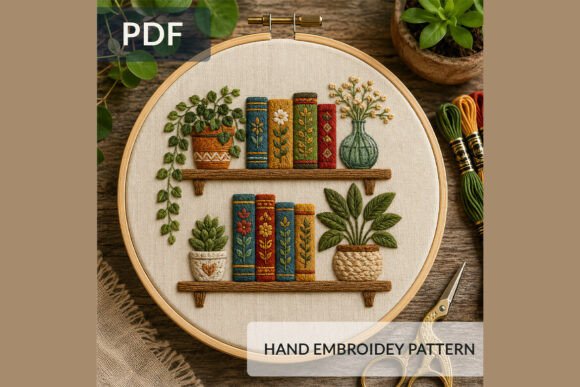
As an embroidery designer who’s developed collections for boutique apparel brands and seasonal sweatshirt drops, my first glance at the Cozy Bookshelf Hand Embroidery Pattern landed right where it should: warm, intentional, and quietly confident. It doesn’t shout — it invites. The composition balances soft botanicals with structured book spines, evoking a relaxed yet curated lifestyle aesthetic. Visually, it reads as feminine without frill, rustic without roughness, and cozy without clutter. For boutique apparel, that balance is gold: it supports brand identity without overwhelming it. Unlike many hand-embroidery-inspired graphics that skew overly delicate or trend-chasing, this pattern feels timeless enough for year-round wear, yet distinctive enough to stand out in an Etsy feed or Instagram carousel.
How It Translates Across Apparel Types
The Cozy Bookshelf Hand Embroidery Pattern shines brightest when treated as a storytelling element — not just decoration. On neutral sweatshirts (think oatmeal, heather grey, or soft black), its layered depth adds quiet sophistication. Pastel hoodies — blush, mint, or lavender — let the botanical accents pop without competing. For dark garments, I recommend testing thread colors with high-contrast options like cream, warm taupe, or muted sage to preserve legibility and texture.
Placement matters. As a chest design on oversized hoodies, it anchors the front with grounded charm — especially when centered just below the collarbone. On sleeves? A scaled-down version works beautifully as a subtle accent near the cuff. For back designs, it scales well across medium-to-large hoops, maintaining readability without needing excessive density. T-shirts benefit from moderate stitch density to avoid stiffness; the pattern’s open negative space helps here. Denim jackets welcome its organic flow — pair it with tonal cotton threads for a lived-in, artisanal feel. And on tote bags or cozy loungewear sets? It becomes a signature motif — one that signals intentionality to customers browsing small shop products.
Real-World Considerations for Sweatshirt Embroidery
Sweatshirt embroidery demands respect for fabric behavior — and the Cozy Bookshelf Hand Embroidery Pattern rewards thoughtful execution. Its mix of linear spines and flowing plant forms means stitch density varies naturally. That’s a strength — but also a cue to check stabilizer choice carefully. Medium-weight cutaway works best for fleece or heavy knits; tear-away may shift on ribbed fabric or stretchy blends. Always test on scrap fabric matching your garment’s weight and texture before committing.
Curved surfaces — like shoulder seams or rounded hems — require slight repositioning during hooping. The pattern’s horizontal orientation makes it forgiving, but avoid placing the tallest book spine directly over high-stretch zones unless you’ve confirmed thread tension and stabilizer hold. Tiny lettering isn’t present here (a plus for apparel), so readability stays strong even at 3–4 inches wide. Still, confirm hoop size compatibility in the Creative Fabrica listing — some versions may include multiple sizes, others only one. When in doubt, download the preview and measure against your standard chest placement grid.
Why It Elevates Boutique Branding
This isn’t just another embroidery file — it’s a quiet value amplifier. Customers scrolling through handmade product listings respond to cohesion and care. The Cozy Bookshelf Hand Embroidery Pattern reinforces a brand voice centered on comfort, curiosity, and slow living. That resonance builds buyer trust faster than generic florals or typography. For Etsy sellers, it performs well in lifestyle product photos: styled beside ceramic mugs, stacked paperbacks, or sunlit windows. Pair it with printable mockups showing relaxed-fit hoodies and linen-blend tees, and you instantly communicate aesthetic alignment — no caption needed.
Visually, it supports consistency across collections. Use it as your anchor motif: repeat it subtly on tag labels, scale it down for social media profile art, or adapt single elements (a trailing vine, a single open book) for smaller applications. That kind of flexibility strengthens visual recognition — critical for small shops building repeat customers. And because it leans into warmth rather than trend, it avoids dating your inventory. You won’t need to retire it after one season.
Practical Designer Notes Before Production
- Test on scrap fabric — especially if using fleece, French terry, or blended knits common in custom apparel.
- Review stabilizer choice — cutaway for stability on stretchy or heavy fabrics; tear-away for lighter tees.
- Confirm thread color contrast — especially on dark or heathered garments where subtle tones can disappear.
- Verify hoop size — ensure your machine’s maximum hoop dimension accommodates the full design comfortably.
- Inspect stitch density — dense areas (like book spines or leaf clusters) may need slightly looser tension on plush fabrics.
- Test on similar garment fabric — don’t assume performance matches your swatch if the final garment differs in weight or finish.
- Compare placement options — chest, sleeve, or back — using printed templates before digitizing or stitching.
- Check Creative Fabrica product details — licensing terms, included formats, and any usage limits before selling finished apparel.
Final Thoughts for Creative Entrepreneurs
The Cozy Bookshelf Hand Embroidery Pattern isn’t flashy — and that’s precisely why it works so well for boutique apparel. In a market saturated with loud graphics and algorithm-chasing motifs, it offers something rarer: resonance. It fits naturally within a lifestyle-driven brand story — whether you’re launching a capsule hoodie collection, curating gifts for indie bookshops, or building a digital embroidery file library for fellow crafters. As a hand embroidery pattern adapted thoughtfully for machine use, it bridges tradition and practicality. And for anyone balancing creative integrity with commercial embroidery realities — it delivers both warmth and wearability, stitch by intentional stitch.