Patriotic 1776 Eagle Embroidery Design
First Impression: Bold, Festive & Instantly Recognizable
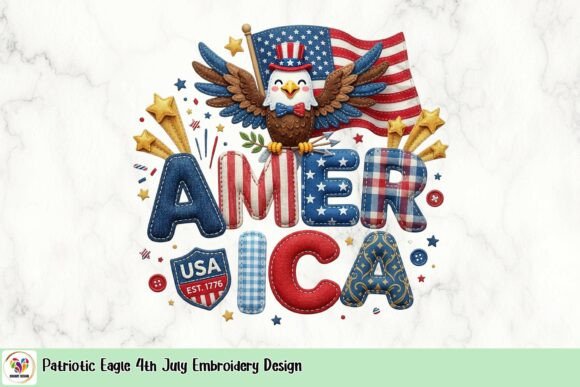
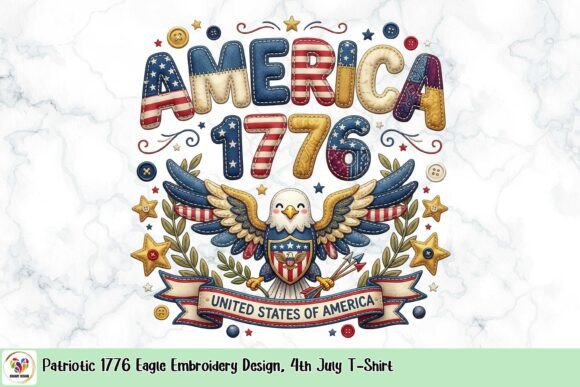
As an embroidery designer who’s prepped over 200 craft fair booths—and watched real customers pause, point, and reach for items in under three seconds—I can tell you this: Patriotic 1776 Eagle Embroidery Design, 4th July T-Shirt lands with confident energy. It’s not subtle. It’s not minimalist or farmhouse-soft. It’s bold, festive, and unapologetically American—exactly what shoppers scan for during holiday weekends. The eagle, stars, and stripes combo reads clearly at arm’s length, and “AMERICA 1776” in a bold stitched font gives immediate context. No decoding needed. That’s gold for a crowded market aisle.
Where This Design Shines on Craft Fair Products
This machine embroidery design isn’t just built for t-shirts—it’s a versatile anchor for high-impact handmade products. On a natural canvas tote bag? It pops with patriotic clarity and scales beautifully across the front panel. On a denim apron? It adds heirloom weight and purpose—ideal for bakers, baristas, and boutique owners who want functional pride. For tea towel embroidery, it works best centered on the top third; the stars and eagle hold up well against kitchen wear, though avoid placing text directly over high-friction folds.
An embroidered patch made from this design sells fast—especially when backed with iron-on or sew-on options. Customers love grabbing a ready-to-apply piece of patriotism for jackets, backpacks, or kids’ caps. As a cap embroidery, proceed with caution: the eagle’s detail and lettering need careful placement above the bill curve. Test stitch density first—tight areas may pucker on structured caps without proper stabilizer.
For small pouches and pillow covers, size matters. Use the full design only on 12”+ pillows. On 5” fabric pouches, opt for a simplified version—perhaps just the eagle + “1776”—to preserve legibility. Market bags and booth samples benefit most when the design is stitched on contrasting fabric (navy, white, or red cotton twill), making it a visual magnet among neutral-toned competitors.
Real-World Production Notes Every Embroiderer Should Know
This is not a low-density, beginner-friendly file. The description hints at layered elements—eagle feathers, star outlines, stripe texture, and bold lettering—all contributing to higher stitch density. That means: test on scrap fabric *before* hooping your best linen tea towel. Check thread contrast carefully—white thread on light fabric vanishes; navy or kelly green thread on navy fabric loses definition. Use cutaway stabilizer for dense zones, especially where stars meet eagle wings.
Hoop size? Likely requires a 5x7" minimum—confirm before batch production. Tiny details (like individual star points or fine stripe lines) may blur on textured towels or thick canvas unless digitized with clean underlay and reduced fill angles. Dark fabric demands brighter thread colors—not just contrast, but vibrancy. And yes, “AMERICA 1776” looks sharp at 3.5” wide, but shrinks poorly below 2”. Avoid using it as a tiny accent on keychains or zipper pulls.
Photography & Online Sales Readiness
This design photographs exceptionally well—especially on flat-lay mockups with natural light and complementary props (firecrackers, vintage mason jars, striped straws). Its strong shapes and clear hierarchy make printable mockups pop on Etsy listings. For digital embroidery file sellers, include multiple size variations (3”, 4”, and 5”) and note recommended fabric pairings in your listing. Buyers appreciate knowing it works on cotton, denim, twill, and even lightweight canvas—but not heavy fleece or terry cloth without stabilization upgrades.
Booth Impact & Customer Engagement
In person, Patriotic 1776 Eagle Embroidery Design, 4th July T-Shirt creates instant booth cohesion. Hang three items—a navy tote, a red apron, and a white pillow cover—all featuring the same motif—and you signal brand consistency without saying a word. Customers remember repetition. They also respond to emotional resonance: this design taps into shared heritage, not just seasonal decor. At checkout, it encourages add-ons (“Do you have this on a patch?” “Can I get it on a kid’s cap too?”).
It elevates perceived value. Hand-stitched quality reads premium when thread sheen, alignment, and spacing are precise. But beware: uneven stitching or skipped stars undermine that impression instantly. That’s why I always recommend stitching one real mockup—not just a digital preview—before committing to 50+ units.
Critical Pre-Production Checklist
- Test the embroidery file on scrap fabric matching your final product’s weight and texture
- Verify thread color contrast on *each* fabric base you plan to use
- Review spacing between eagle elements and text—tight gaps may merge in dense stitching
- Confirm hoop size compatibility with your embroidery machine’s largest standard hoop
- Inspect stitch density in feather and star areas—adjust if needed for your fabric type
- Use appropriate stabilizer: cutaway for knits and towels, tear-away for stable wovens
- Create at least one finished product mockup under real lighting—not just screen previews
- Compare how the design reads on light vs. dark fabric swatches side-by-side
- Confirm commercial licensing terms—this is essential for any small shop product sold beyond personal use
Final Thought: A High-Return, Low-Risk Patriotic Asset
Patriotic 1776 Eagle Embroidery Design, 4th July T-Shirt isn’t just another T-Shirt Designs graphic—it’s a repeatable, emotionally resonant, and visually commanding asset for handmade markets. When executed well, it turns everyday items into conversation starters, builds booth authority, and converts casual browsers into loyal buyers. For Etsy sellers, craft fair vendors, and boutique makers alike, this is the kind of embroidery file that earns shelf space, social shares, and summer reorders. Just remember: bold design demands thoughtful execution. Respect the density, honor the details, and let the eagle take flight—on totes, towels, patches, and proud handmade products.