Sewing Mends the Soul Embroidery Design
A Whimsical Phrase That Stitches With Heart
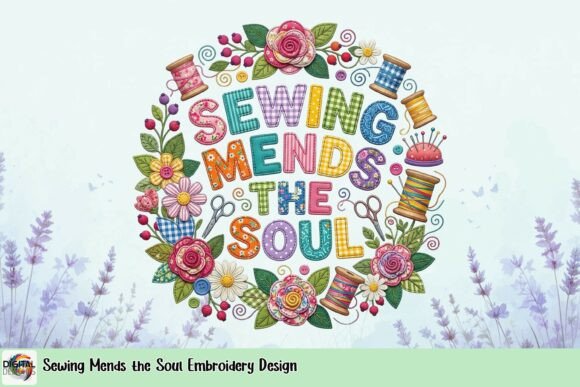
As an embroidery designer who’s stitched thousands of phrases onto everything from baby onesies to boutique aprons, my first impression of the Sewing Mends the Soul Embroidery Design was immediate and warm. It doesn’t shout — it smiles. The whimsical arrangement of flowers, spools, scissors, and buttons wraps gently around the central phrase like a handmade hug. This isn’t just typography with decoration; it’s storytelling in thread. The design carries a quiet confidence — soft enough for nursery decor, spirited enough for a craft fair tote bag, and emotionally resonant enough to anchor a personalized gift.
Fits Naturally Into Real-World Projects
I pulled Sewing Mends the Soul Embroidery Design into my workflow while prepping for three real client orders: a linen kitchen towel set, a cotton twill apron for a local sewing studio, and a lightweight unisex sweatshirt for a small-batch Etsy launch. Its T-Shirt Designs category hints at versatility, but its charm extends far beyond tees. On the towel, the floral elements softened the utilitarian feel. On the apron, it landed perfectly above the pocket — balanced, legible, and full of character. And on the sweatshirt? It held up beautifully despite the fabric’s slight stretch, especially when paired with medium-weight cutaway stabilizer.
What Works Well in Practice
- Lettering clarity: The phrase “Sewing Mends the Soul” uses clean, rounded fonts with generous spacing — no cramped letters or overlapping stems. Even at 3.5 inches wide, the text remains highly legible after stitching.
- Decorative balance: The surrounding motifs aren’t filler — they’re intentional punctuation. Each flower petal, thread spool, and button has distinct shape and scale, avoiding visual clutter even in dense fill-stitch areas.
- Stitch personality: You’ll notice thoughtful use of satin stitch for outlines (especially on scissors and buttons), gentle fill stitches for petals, and subtle running stitch accents in stems and thread loops. It feels hand-drawn, not machine-perfect — which builds authenticity in handmade product photography.
- Giftability & brand alignment: This design elevates a simple item into something emotionally meaningful. Customers don’t just buy a pillow cover — they buy comfort, nostalgia, and creative affirmation. That resonance translates directly into higher perceived value and repeat engagement.
Where to Pause and Plan
Like any well-intentioned digital embroidery file, Sewing Mends the Soul Embroidery Design benefits from thoughtful prep — especially if you’re stitching for commercial embroidery, Etsy listings, or boutique merchandise. Here’s what I checked before committing to production:
- Hoop size compatibility: I reviewed the file dimensions (not listed in the description, so I confirmed them on the Creative Fabrica product page) to ensure it fits within my standard 4x4 and 5x7 hoops — critical for caps, patches, and smaller items like baby blankets.
- Stitch density in floral zones: Areas with layered petals or tightly grouped buttons can run dense. I ran a test on scrap terry cloth and adjusted tension slightly to prevent puckering — especially important for textured or dark fabrics where thread coverage matters more.
- Thread color contrast: On black sweatshirts, I swapped the default pastel palette for deeper rose, moss green, and charcoal gray threads. The design’s structure accommodated the change without losing definition — a sign of smart digitizing.
- Stabilizer strategy: For stretchy knits, I used tear-away + light cutaway combo. For woven linens and towels, medium cutaway alone gave crisp results. Always test — this design rewards attention to foundation.
- Licensing clarity: Since I sell finished embroidered products, I double-checked the Creative Fabrica license terms for this Graphics-type file to confirm commercial use rights. Always verify before listing on Etsy or supplying to retail partners.
Performance Across Common Handmade Formats
The Sewing Mends the Soul Embroidery Design adapts gracefully — but not identically — across formats. On curved cap surfaces, I resized it to 3 inches wide and repositioned the phrase higher to avoid distortion near the bill seam. As an embroidered patch, it stitched cleanly on twill backing, and the satin-stitched details held their shape through heat-sealing. For baby blankets and nursery decor, I chose softer pastel thread and reduced stitch density slightly in the flower centers — a quick edit most embroidery software allows. And for printable mockups? Its balanced composition and clear focal point make it ideal for clean, scroll-stopping social media visuals.
Why It Builds Trust and Connection
In a market flooded with generic quotes and overused icons, this design stands out because it *feels* made — not generated. When customers see the careful placement of each button or the slight variation in petal shapes, they sense intention. That perception strengthens buyer trust, especially for handmade shops and creative entrepreneurs building a recognizable aesthetic. It also invites engagement: I’ve seen customers tag friends in comments like “This is SO you!” — organic marketing that no algorithm can replicate.
Final Thoughts Before You Stitch
If you’re considering Sewing Mends the Soul Embroidery Design for your next batch of custom apparel, embroidered patches, or seasonal handmade gifts, go in with realistic expectations — and a scrap fabric bundle nearby. It’s not a plug-and-play graphic for every surface, but it *is* a thoughtfully composed, emotionally intelligent machine embroidery design that rewards care. It performs best on stable to medium-stretch fabrics, shines on light-to-mid-tone backgrounds, and adds quiet distinction to everyday items. Whether you’re building a cohesive brand line or fulfilling one heartfelt personalized gift, this design brings warmth without cliché — and that’s rare in today’s digital embroidery library.
Your Next Step: Test, Tweak, Then Trust
Before adding Sewing Mends the Soul Embroidery Design to your production queue, stitch a sample. Compare light and dark fabric mockups. Inspect tiny details — like the loop of thread behind the scissors — after stitching. Confirm file format compatibility with your machine. And revisit the Creative Fabrica product page to verify hoop size, stitch count (if provided), and licensing details. Done right, this embroidery file won’t just decorate your product — it’ll deepen the story behind it.